Types of Dental Bridges:
Traditional Bridge
A traditional bridge is a dental restoration that consists of a row of artificial teeth with connecting crowns on each end. The crowns attach to the natural teeth on either side of the gap. These teeth support the bridge so that it remains securely in place. This type of bridge is commonly used when there are healthy natural teeth on both sides of the gap.
Cantilever Bridge
A cantilever bridge differs from a traditional bridge because it is anchored by a tooth on just one side of the gap. We use these bridges when only one healthy tooth is available for support, making it suitable for specific cases where a traditional bridge might not be feasible.
Maryland Bridge
Unlike traditional bridges that rely on crowns for support, Maryland bridges are connected to the back of the teeth with metal wings. The main advantage of a Maryland bridge is its less invasiveness. For these bridges, we don’t need to remove enamel to make space for the support crowns. While these are often used for front teeth, they are not recommended for teeth that withstand heavy bite forces, like molars.
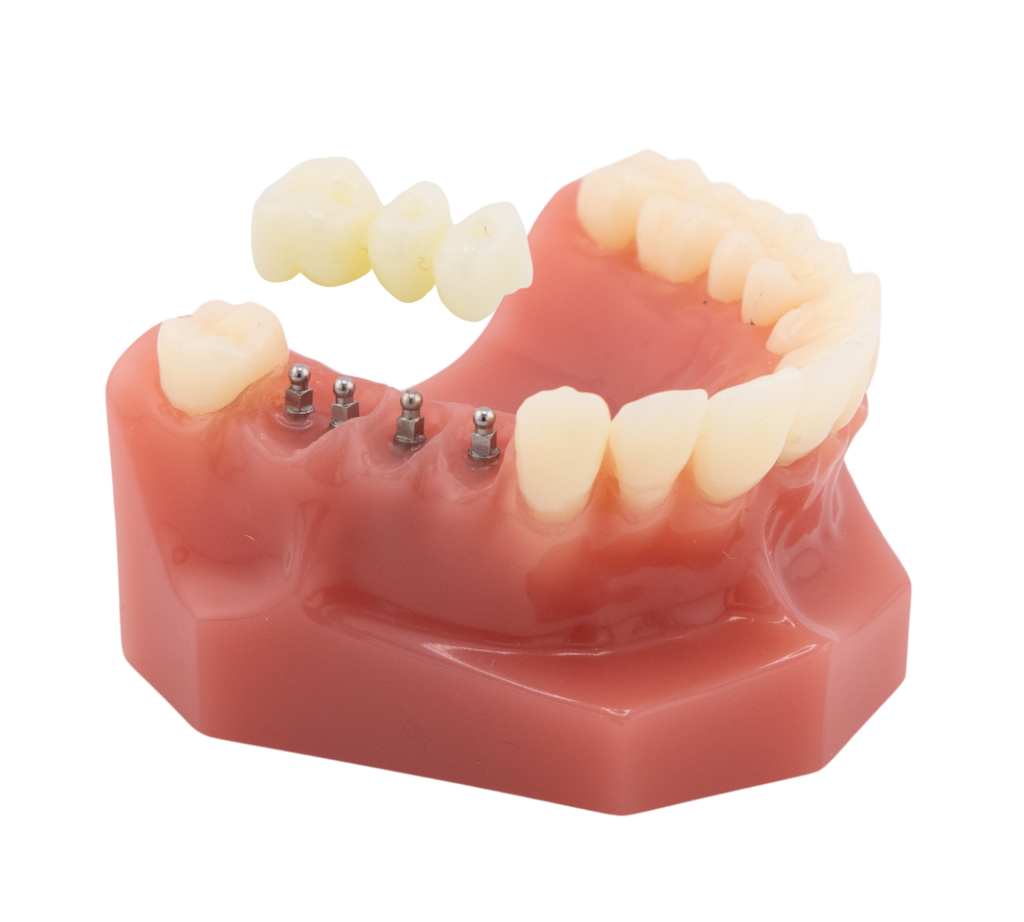
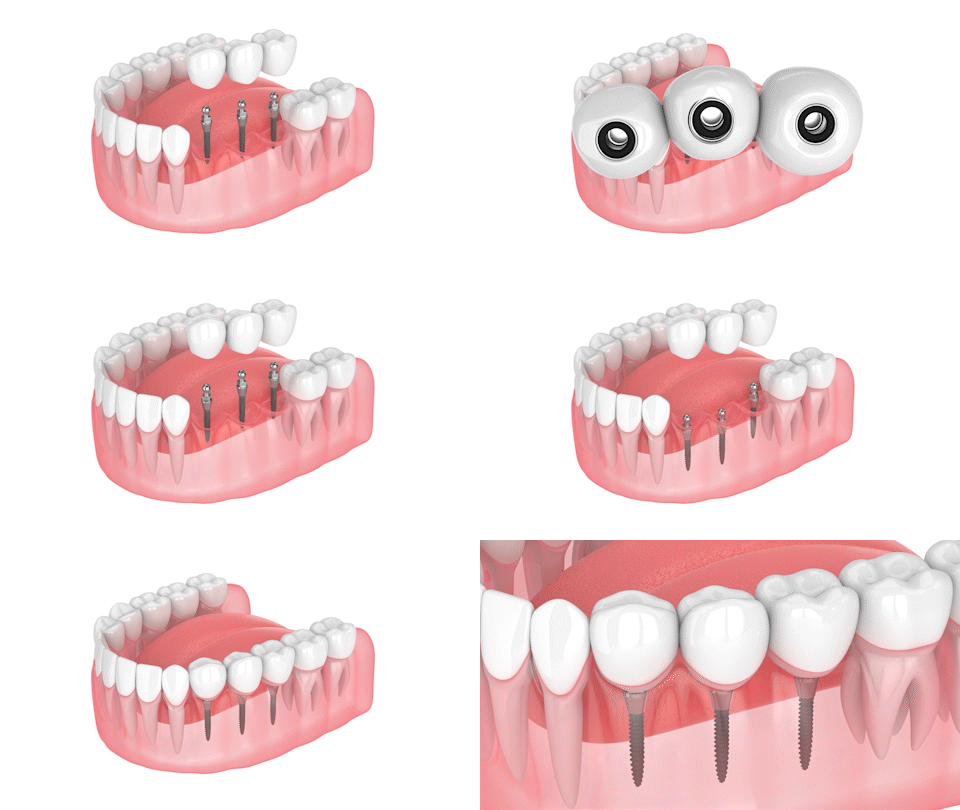
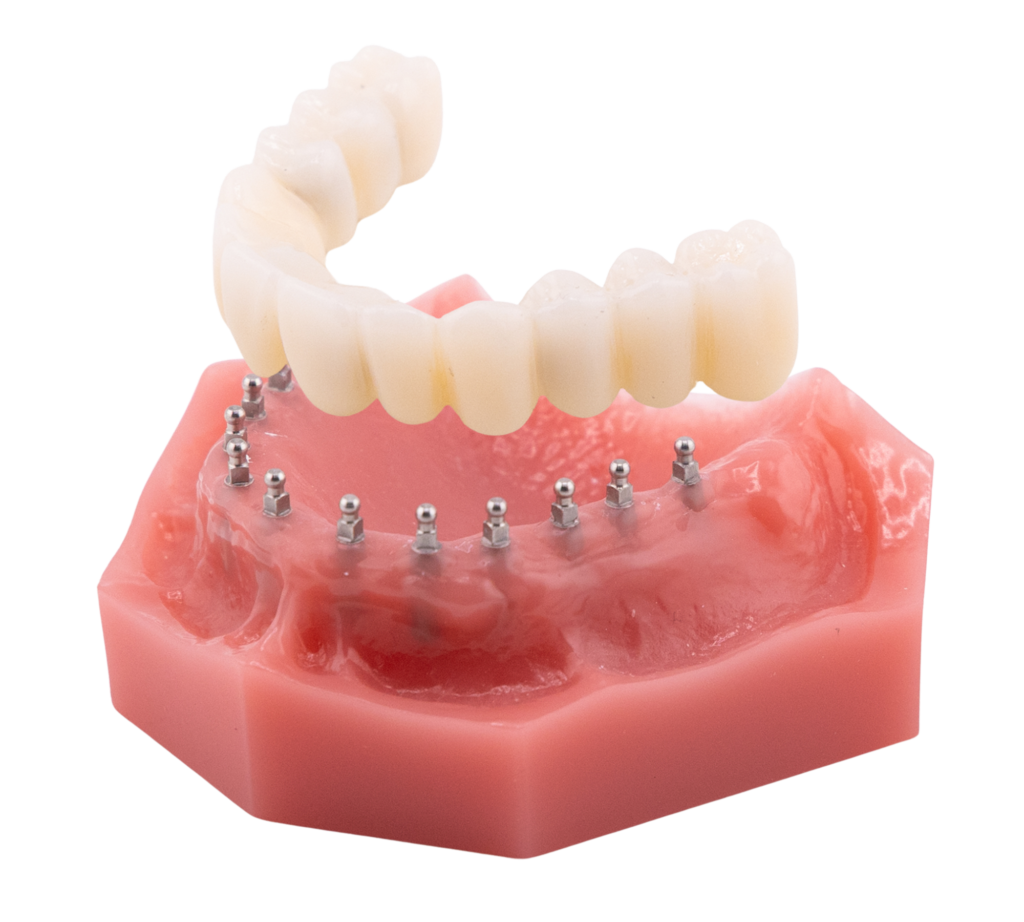
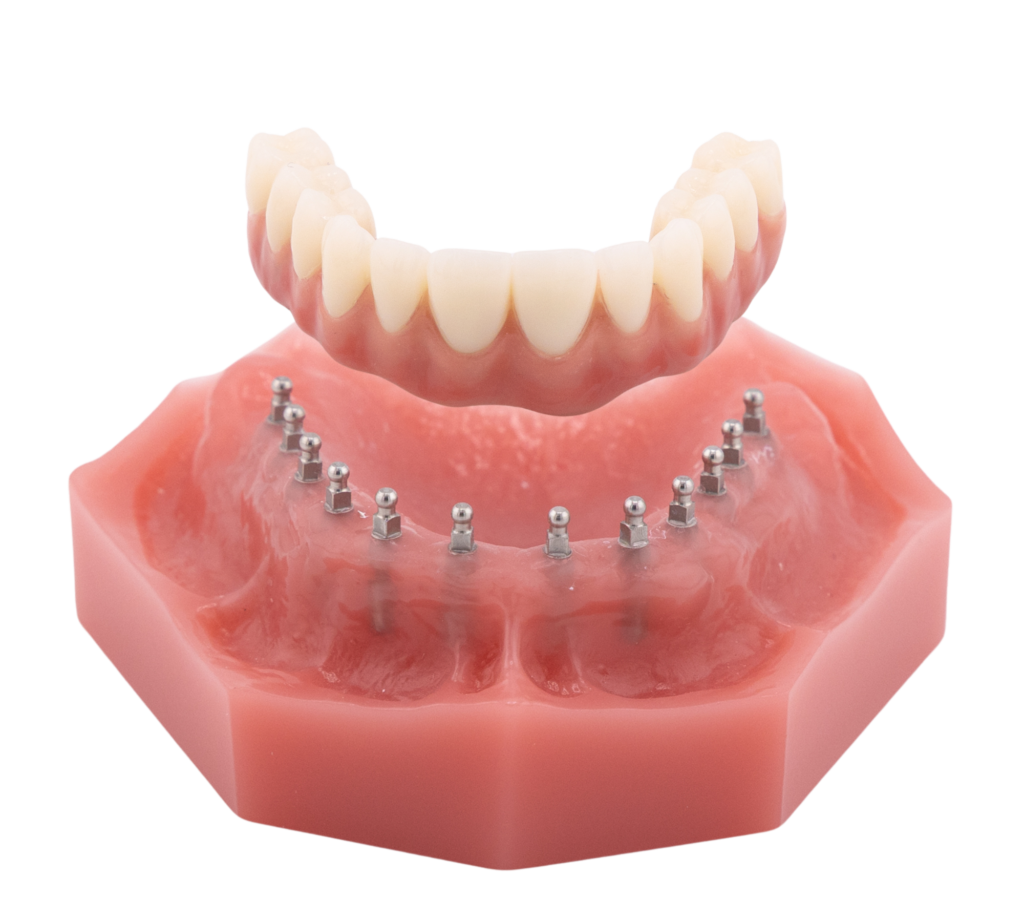
Implant-Supported Bridge
Unlike traditional bridges that rely on natural teeth for support, this type of bridge is anchored to mini dental implants inserted into the jawbone. Since the bridge is connected directly to the implant, it can provide stronger support and a more long-lasting tooth replacement solution.